To walk along the borders and break the stereotypes left in our minds, which are that borders are only equipped with barbed wire, trenches, various defensive structures and are dangerous.
Baarle is a village that is like a mosaic, each piece is a part of a state, each piece of land must be painted in the colors of its country’s flag and each puzzle must be put in its place so as not to get confused, otherwise it will become an interstate, even international issue.
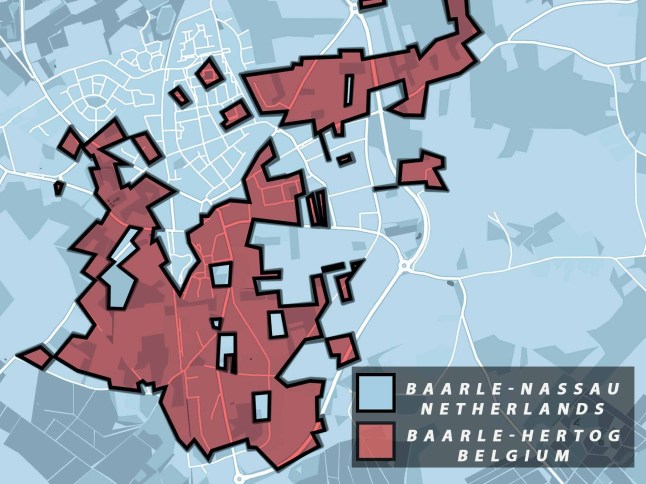
Baarle is a village located on the border between the Netherlands and Belgium, resembling a large labyrinth of enclaves and exclaves. Historically, 22 small Belgian territories remained within the Netherlands, officially called enclaves, and 8 smaller parts of these Belgian territories are Dutch, also called exclaves.
And just like that, there are two states in one village: the Dutch part is called Baarle Nassau, and the Belgian part is called Baarle Hertog /3078+7200 inhabitants/. The Dutch and Belgian parts are different, although intertwined, but each is subject to the rules and laws of its own country.
The map, of course, will help to understand what the picture is like in Baarle, but not everything is so easy, and who owned the house whose kitchen is in Belgium, and whose living room is in the Netherlands, and whose interstate border passes between the beds, this issue was discussed for a long time and during the demarcation it was decided: Where the door of the house is, that country belongs to that house with its inhabitants.
And so, during one night, the decision is finally made and with all her heart and soul Belgian grandmother in the morning, appears through her door in the Netherlands, the indignation is great, and the solution is simple: she closes the Dutch door and installs a door in the part of the house that opens to Belgium.
This is becoming a precedent and in this village, doors become decisive and one house can have two doors in two different states, whose tax policy, organizational and legal regulations are more favorable, they become residents of that part voluntarily and with an open door.
Until 1995, Baarle did not have clear borders
Willem van Gool is 74 years old, he is the head of the tourism center. In his youth, he considered Baarle a boring village, and now he gladly tells tourists the history of his village, interesting events, without boredom and using his own example to present the problem of borders and their solutions.
-There is a house in Baarle, the state border passes right through the middle of the door, the house has both Belgian and Dutch numbers. In such cases, I joke, saying that when planning a child, be careful in which country your bed is placed, it depends on whether he will be born Belgian or Dutch, – he says with a smile.
Photo by The New York Times
There are many such jokes here, but beyond the jokes there is a chronology, dates and facts that were not so funny.
Until 1830, the Netherlands and Belgium were part of one state, but the Belgians rebelled and declared independence. When they arrived at Baarle, drawing the borders, they realized that if they started to clarify the borders of this village and put them on the map piece by piece, the demarcation would take another 10 years.
“Let’s stop here, then we’ll come back and fill this gap,” said the group of demarcaters and left Baarle, Willem says, clarifying that the border gap was about 60 km. The border posts, which were installed in the 19th century after the demarcation, are not in this village; Baarle was between the 214th and 215th border posts.
We, the inhabitants, knew who owned every little square, but the demarcaters left and forgot to return for more than a hundred years.
And this land patchwork began back in the feudal system, when dukes and counts donated, leased, transferred or inherited land. If previously these land puzzles were cultivated lands, now instead of them there are 170 structures: houses, shops, churches and schools.
You cross the border about 60 times on your way from home to work
-Before the creation of the European Union, we were two different countries, with different laws, currencies, and border guards. It was important to have a pass when going to work, and it had to be written on the pass what we had. For example, if a locksmith went to work in the other part of Baarle, he had to declare what instruments he had with him along with the pass. And he had to show it to the border guards every time. All this was often annoying and they paid also fee to cross the border.
This border crossing also helped residents buy cheaper goods from the neighboring country. In Belgium, there was a problem with bread and butter, it was very expensive, and in the Netherlands, butter was very cheap. In Baarle, you could cross the street and buy expensive butter. However, the cunning ones took advantage of this situation and started making money by selling butter.
When, in addition to bread and butter, they began to smuggle alcohol, prohibited items, weapons, drugs… Baarle became a paradise for smugglers and left a big mark on the history of the village. It is not for nothing that a statue dedicated to “De Pungelaer” – the smuggler – was erected here.
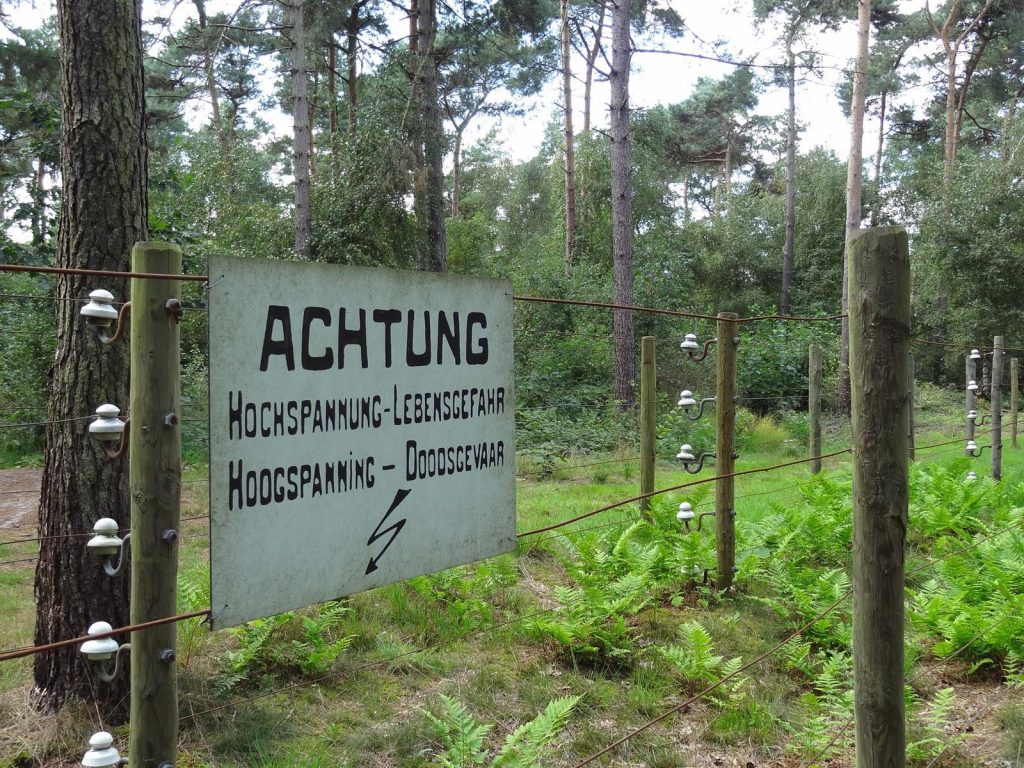
The Death Wire of the Border “De Dodendraad”
In 1915, during World War I, Germany occupied Belgium and in order to prevent escapes to the neutral Netherlands, to nullify supplies with the enemy, espionage and communication links, it built an electric fence along the entire border of Belgium and the Netherlands (over 300 km long). The posts were covered with wires that were constantly charged with a current of 2000 volts. Even a single touch could be fatal.
However, the border in the Baarle area was so intricate that building the fence was quite difficult. Therefore, Baarle became an important crossing point for refugees, spies and supplies. Many Belgians tried to reach the Netherlands through Baarle, bypassing the deadly wire.
But this was not tolerated for long, and the deadly wire even crossed these tangled borders: it ran through gardens and home yards.
3,000 people died of electrocution while crossing these wires, but Baarle, with its tangled borders, leads the way in the number of victims. Many Belgians tried to cross the fence using various tricks (digging tunnels, using beer barrels, dry wood or rubber elements), 16-year-old Miet Pauw from Baarle-Hertog smuggled people across the border, risking her own life and the lives of her relatives. She helped many during both the First and Second World Wars.
Every year, children from Dutch and Belgian schools gather to honor Miet Pauw. One year, the Hertog school organizes a big event, the next year, the Nassau school. This is a unique form of reconciliation between the villages, an attempt to share a difficult period in history with each other, not by forgetting, but by remembering and appreciating the difficult path traveled.
The enclaves got their own “passport”
In the 1970s, in order to finally resolve the gap in the border between the Netherlands and Belgium, they decided to start redrawing the border. More than 100 years had passed, and it took more than two decades to redraw the border.
A piece of land that belonged to no one and was called that, was recognized as Belgian by an international court decision in 1995, without a war, and the Belgian border was expanded by 50 square meters. Officially, Baarle has 22 pieces of Belgian enclaves: Baarle-Hertog, 8 pieces of Dutch exclaves.
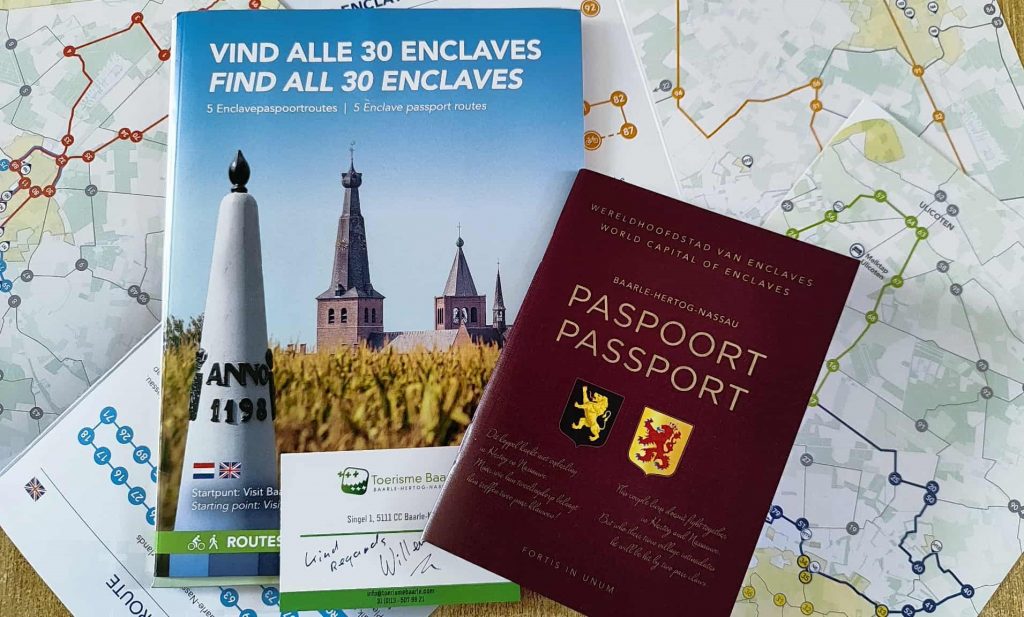
Baarle is a village, but its residents consider it the capital of enclaves in the world. They studied the enclaves in the world and compiled a tourist passport. They have identified 64 enclaves, of which about 30 are located in Baarle, they have the most, so they have reserved the title of being called the capital of the enclaves for their village.
When chess pieces even cross the border
The number of visitors to this village is increasing every year, some want to appear in two countries at the same time, some want to walk across the border, and others want to understand how such peaceful borders can exist in our irreconcilable world.
The people of Baarle are also sparing no effort to build everything right on the border, bridging the differences between the two countries, making the borders more flexible and balanced.
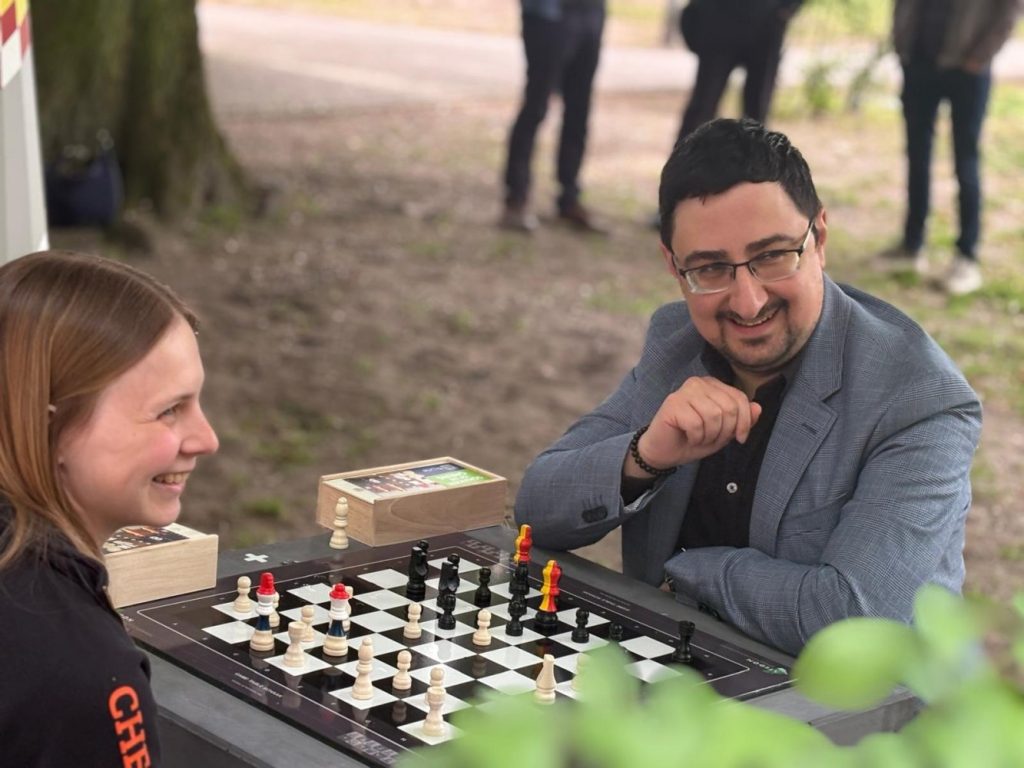
In April of this year, the opening of the chess table was organized. Dutch and Belgian chess players marked the chess table installed right on the border with their game.
The cross-border table was opened with the Belgian and Dutch chess kings and queens, FIDE representatives, Dutch women’s chess grandmaster Anne Haast, and FIDE master Ruben Aghayan representing Belgium.
Our compatriot Ruben Aghayan has been in Belgium since 2000. Hե has thought a lot about European and our borders. He believes that in order to have such borders, it is necessary:
“A mutual compromise. Here, everyone makes some kind of compromise, unfortunately, in our case there is no such approach, only we want to live in peace, but on the other side of the border, they imagine that peace differently. The Dutch and the Belgians did not have such a big conflict, but the French and Germans had huge problems, but today they have good relations, because that aspiration was mutual. I am not saying that they sought to forget the past, but rather they smoothed out the differences and created new relations after so many difficult years.”
In Baarle, the representative of the Netherlands won the cross-border chess, and when the children played, Ruben’s 7-year-old daughter brought victory to Belgium.
“Although we are in a difficult phase now, and I don’t know what we can do, I hope that one day, we in Armenia will be able to organize a symbolic event on the border with our neighbors. I hope that one day their mentality will change․ I’m not saying to become brothers, but at least not to hate each other; Every country will be able to develop normally, knowing that it is not threatened by war,” Ruben Aghayan shares his opinion․
When asked whether he would play such cross-border chess with our neighbors on our border, he answered: -Of course, why not, it would be a good step for both sides, I would play with pleasure.
Enclaves help resolve uncertainties and “mess”
Photo by Mark A Phillips
– It’s easy to draw borders and create problems, but living together and finding solutions requires much more effort. All over Europe, enclaves continue to challenge our traditional understanding of borders and encourage us to think more flexibly.
This is the perspective of Mark A Phillips, a photographer based near London and a Fellow of Royal Photographic Society, who has explored many of Europe’s enclaves. His other recent projects explore the climate crisis and the importance of sharing, repair and reuse as a response to waste and to creating a more sustainable future.
“Unbound – footprints of Europe” visited and photographed 42 of the 44 enclaves within the European Union, visiting some many times, engaging with local archivists and historians. Representing footprints from the history of Europe, he explores the maleability and flexibility of these borders, and how they manage to maintain identity and sovereignty in such a tangled labyrinth.
– We need ‘borders’. They create a sense of identity and somewhere to belong. Many of the areas visited maintain their identity, and their local customs and cultures. Llivia (a Spanish enclave just inside in France) is determindly Catalan. Baarle retains both Belgian and Dutch customs. In some cases, they have even reinforced this local identity by working together with neighbours. My sense in that, the “problems of borders” are more to do with central governments than how people act at the local level. The EU and the creation of the Schengen area have, in turn, contributed to solving border problems by reducing he need for physical barriers.
-In the modern world, enclaves, are a bit of an anomaly. They counter the central governments’ aim at having nice, neat borders and control. My interest in them is that they are places of interdependence, they deal with ambiguity and ‘messy’ situations. Therefore, they are good places to find solutions, and to find places where people work together. A common theme is how all these areas develop local solutions and find ways to make it work. They exhibit a degree of unruliness and maybe seen as a little subversive to how the central governments would like things. But that’s a good thing.
It takes courage to live in peace
It was not an easy road for the Belgians and Dutch to live together, to share their national characteristics in one village. In this village, each citizen of each country had their own school, church, municipality, and police.
By the way, the most difficult thing for the police was that a Dutch criminal, in order to escape, had only to cross the street and end up in Belgium, where the police had no authority to arrest him. Or there was another precedent when a murder was committed and for years they decided in which country it was, to be convicted under Dutch or Belgian law.
And in the event of an accident on the street, they began to decide whether to call the medical assistance of Baarle Nassau or Baarle Hertog for help, the victim could remain helpless until this issue was resolved.
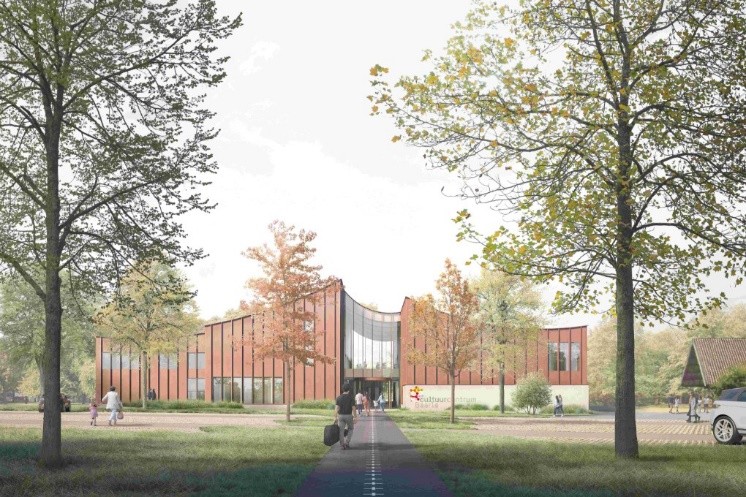
Now these issues are not there, but that does not mean that everything is decided at once. For example, the discussion of the construction of the Cultural Center began in 2020 and construction will begin only this year.
-We have been discussing everything for 5 years, for example, who should be the architect of the center: a Dutchman, who designs beautiful structures, or a Belgian, who is more responsible for new technologies and security. After long discussions, we decided that it would be both, and so on, every detail, -Willem van Gool notes.
The border runs through the middle of the Cultural Center, these symbolic steps ensuring equality between borders have helped to move forward and respect each other’s opinion, national characteristics.
The steps of equality or unification have not contributed to artificially assimilating or appropriating each other’s uniqueness, even in small matters they are delicate; For example, both Dutch and Belgian mayonnaises are served together in Baarle, sweet or sour, lovers of flavors choose for themselves.
And the first step was 60 years ago, when Belgian and Dutch schoolchildren were united in one room, the daily fights gradually decreased, they began to talk and become friends. By the way, Willem van Gool was one of those children and he also advises that everything should start with the children. These steps are still ongoing: joint bicycle tours, camps, various events.
“Do you think the borders are symbolic and there are no problems here? The meetings of the community council are heated, there are issues that we disagree with, but we are able to have a dialogue, discuss, even if it takes years. It takes courage to listen to the opinion and proposal of the other side, patience to debate, and also responsibility for decisions.
For example, during the coronavirus, masks were mandatory in one country, but not in the other. In order to regulate the unstable situation, two community leaders decided to apply the strictest measure, that is, everyone had to wear a mask. This had no legal status, but both the Dutch and the Belgians obeyed this rule, because it is a responsibility towards each other and establishes new, bilateral rules on the spot for our residents of the enclave,” Willem van Gool says at the end of our conversation and promises to send me the passport of the capital of the world’s enclaves, the author of the idea of which was himself.
A month later it reached me, on the first page the passport defines the term enclaves and invites:
“Borders separate people and states, but in enclaves we perceive the border as a meeting place for different cultures, an opportunity to learn from each other. We invite you to us to expand the boundaries of your own thinking, for which the borders of our small village can be the inspiration.”
This is how Baarle Nassau and Baarle Hertog welcome and see off their guests.
As a guest, the white crosses on the ground and the dome of the church built in the form of border pillars will always remain in my mind, silently testifying to those borders that were intricate, sometimes saving, often a trap, and now enviable and exemplary for warring countries.
Most of the photos are taken from the Toerisme Baarle-Nassau-Hertog website and social media pages, some also have copyright notes on the photos
Anahit Harutyunyan
This article was published within the framework of the “Explaining Democracy: Reporting Initiative” program, with the support of the Embassy of the Kingdom of the Netherlands in Armenia.