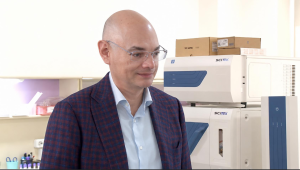
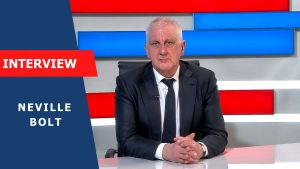
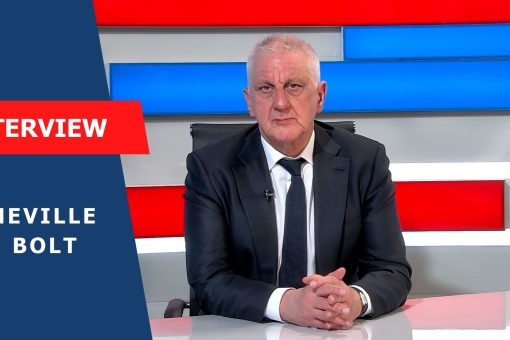
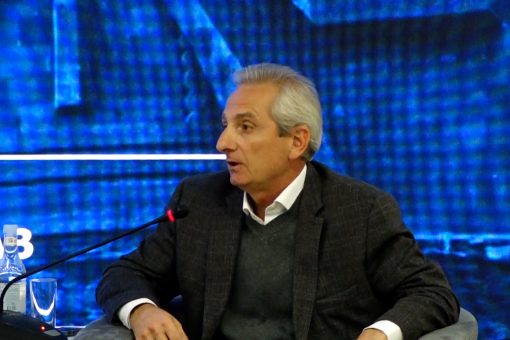
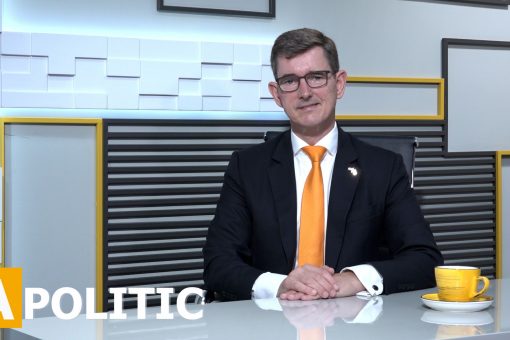
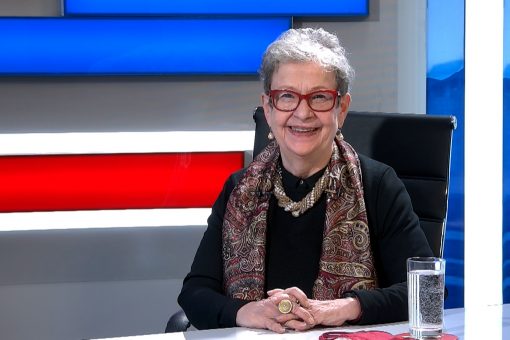
In an interview with Factor TV, Dr. Neville Bolt, Director of the Sympodium Institute for Strategic Communication and Editor-in-Chief of the NATO Defence Strategic Communications Journal, reflected on Armenia’s complex position as a small state facing both internal and external pressures. The discussion touched on questions of national identity, the strategic value of the diaspora, and the difficulties of preserving democratic values in an uncertain world.
Dr. Bolt framed Armenia’s main challenge not simply as a matter of geopolitics or neighboring powers, but as a deeper question of national coherence and purpose. He talked about the risk of constant political accommodation: “The biggest mistake is to place itself in a position of eternal appeasement—adapting ambitions and the desires of its people to outside conditions. Instead, any state should build a coherent vision of the future and a sense of identity for its citizens.” For him, a clear national story is the foundation on which strategy and policy must be built.
A major asset in this process, Dr. Bolt emphasized, is Armenia’s global diaspora. “You are blessed to have Armenians both in Armenia and abroad. The diaspora is a major asset of the state—talented, imaginative, and well-educated people who live outside the country but remain connected to it.” In a world defined by networks and global interdependence, he argued, this community strengthens Armenia’s identity and provides resources that can help the country navigate international challenges.
Since the 2020 war and the political polarization that followed, debates in Armenia have intensified over the balance between historical identity and a more state-centered vision of nationhood. Dr. Bolt described identity as something that evolves over time through dialogue and reflection. “A national identity changes gradually through discussion—a constant conversation between the past, the present, and the future.” Consensus, he states, cannot be imposed from above but must emerge through open and inclusive debate.
On democracy and liberalism, Dr. Bolt offered a nuanced perspective relevant not only to Armenia but to democratic societies worldwide. “Democracy is going through a period of self-reflection,” he noted. “I hope it is searching for ways to become more responsive, accountable, and transparent.” Liberalism, in his view, is not a rigid ideology but a set of tendencies that societies interpret in different ways. Economic conditions also matter: when market capitalism fails to deliver broad prosperity, public confidence in democratic institutions can weaken.
Dr. Bolt also stressed the importance of independent institutions-especially the media-in sustaining democratic societies. “At the heart of democracy is an independent press and independent journalism,” he said. Such institutions must have the freedom to investigate truth and hold power to account. Societies are naturally diverse, he added, and the challenge is to build harmony without suppressing differing opinions.
Through his reflections, Dr. Bolt portrayed Armenia’s moment as both difficult and full of possibility. Small states, he suggested, can succeed in turbulent times by grounding themselves in a clear national vision, engaging the diaspora, nurturing democratic processes, and protecting independent institutions. As he concluded, “What is solid is your story. Recognize it and tell that story clearly—to your own people and to the world.”
The full interview with Dr. Neville Bolt is available in the video above.