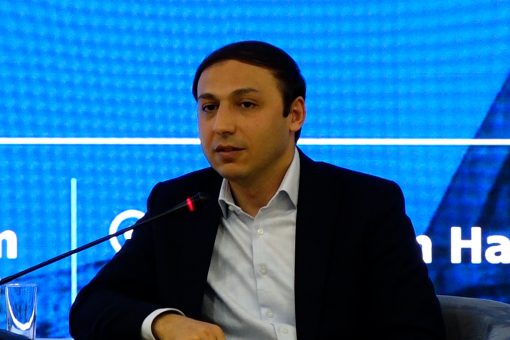
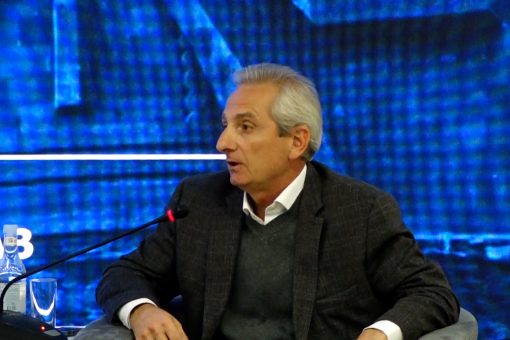
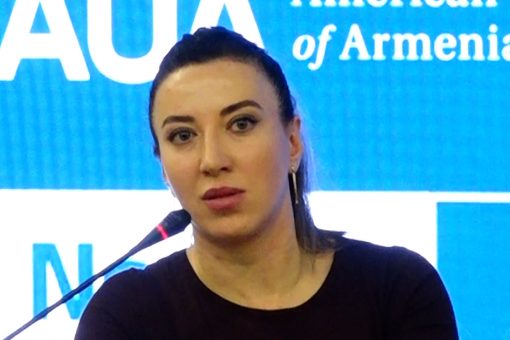
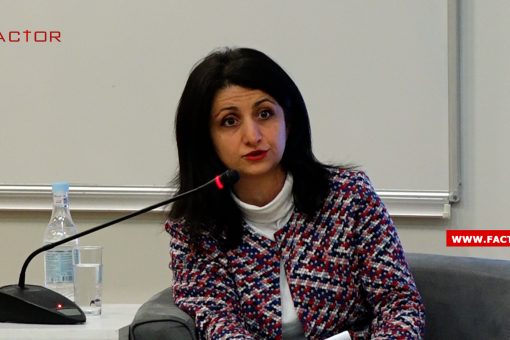
The fate of Armenians has become a tool for states to leverage relations and assert authority, especially through the continued abduction and imprisonment of civilians, argues Dr. Siranush Sahakyan, President of the Center for International and Comparative Law and representative of prisoners of war (POWs) at the European Court of Human Rights (ECHR).
During the panel discussion being held in Yerevan, Dr. Siranush Sahakyan presents the reality of Armenians facing the ongoing Armenian-Azerbaijani conflict. “The continuous arrests of Armenians are part of state politics,” Sahakyan states, emphasizing that the detention of Armenians is not merely a consequence of conflict, but a deliberate strategy used to exert political pressure.
The abduction of Armenians has been a persistent problem since the 2020 escalation of the conflict. Over 300 Armenians have been taken hostage, many of whom were civilians with no connection to the fighting. Though 210 have been released, some remain trapped in Azerbaijan. Their return, Sahakyan notes, is often complicated by the lack of clarity about their initial abduction. Some were detained during the hostilities, while others were taken from peaceful, non-conflict areas, making their cases more complex and difficult to resolve.
Sahakyan emphasizes the contrast between the political rhetoric surrounding these prisoners and their actual circumstances. “When we speak about their status, we use different terminology: most of them are referred to as prisoners of war, but we also have hostages,” she explains.
The classification of these individuals is not just a matter of semantics, but has profound implications for how their rights are defended on the international stage. According to her, 23 Armenians currently imprisoned in Azerbaijan reflect this complexity: five were abducted in 2020, while the remaining 18 were taken in 2023, including eight prominent former leaders of the Artsakh.
Sahakyan points out that setting these persons free are related to both political, diplomatic and legal works, and there is no single international mechanism that is fighting against the torture. The International Committee of the Red Cross (ICRC) has been involved in mediating communication with the imprisoned Armenians, but even this limited access has been hindered. “During the stages of the conflict, even the ICRC’s entry was blocked, and many months later when some prisoners were returned the ICRC never ever visited them.”
One of the most distressing aspects of this crisis is the systematic abuse faced by vulnerable groups, regardless of their age, gender, or military involvement. Sahakyan underscores that even civilians with no connection to the war, including women and the elderly, have been subjected to the same brutal treatment as combatants. This, she argues, is indicative of a broader, deeply rooted policy of Armenophobia, a hatred that permeates every aspect of the conflict. “They have been ill-treated with the same intensity, whether they were military personnel or civilians. Age and gender have not provided any protection,” Sahakyan says.
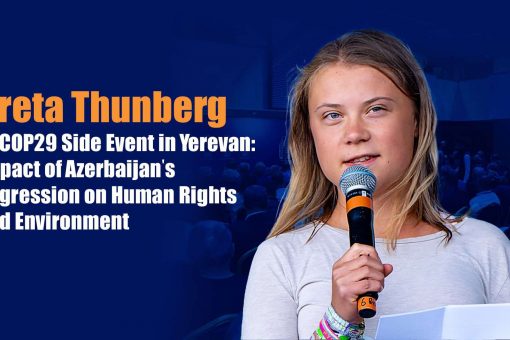
The panel discussion is being held within the framework of the “The Impact of Azerbaijan’s Aggression on Human Rights and Environmental Protection” conference, organized independently as a side event to COP29. The special guest is Ms. Greta Thunberg, an environmental activist, who has chosen to boycott COP29 in Baku and arrived in Armenia following recent protests outside Azerbaijan’s embassy in Tbilisi, Georgia.