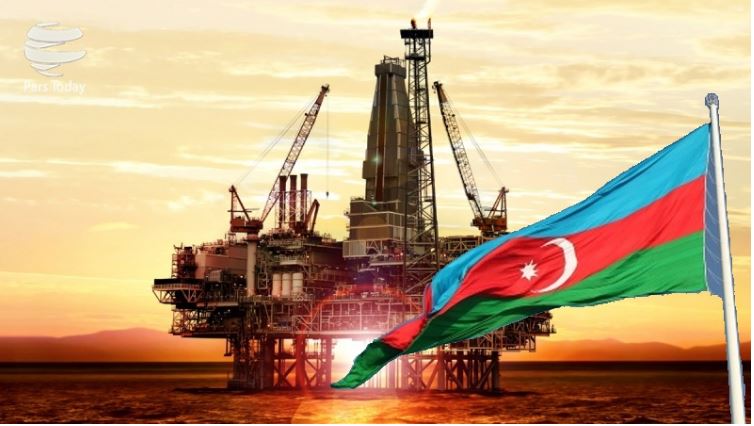
Azerbaijan risks significant economic shocks in the future if it continues to rely heavily on oil and gas as the main pillar of its economy, a new report from the International Energy Agency (IEA) warns.
The post-Soviet development of Azerbaijan’s substantial energy reserves, and the construction of new pipelines to transport them to European markets, allowed the country’s economy to grow by a staggering 2,178 percent between 1995 and 2014.
But, the IEA’s 160-page report warns, global energy markets are changing rapidly.
The industrialized nations that import most of Azerbaijan’s energy have pledged to achieve zero net emissions by 2050 in order to meet their commitments under the Paris Climate Change Agreement. That means greatly reducing their oil and gas consumption.
And even international oil companies like BP which have supplied the bulk of the investment to develop Azerbaijan’s hydrocarbon reserves are seeking to reduce carbon emissions and diversify into renewables.
This poses significant challenges to Baku, the IEA says. Oil and gas represent 90 percent of Azerbaijan’s export revenues and fund 60 percent of the state budget. Hydrocarbons account for 98 percent of the country’s own energy needs and generate 90 percent of its electricity.
That over-reliance on hydrocarbons leaves Azerbaijan vulnerable to changes in global markets. When energy prices collapsed in 2014-2015, the Azerbaijani economy halved: from a GDP of $75 billion in 2014 to $38 billion in 2016.
The COVID-19 pandemic also saw a drop in global energy prices and as part of the OPEC+ response to the slowdown, Azerbaijan agreed to cut oil production. Azerbaijan’s economy contracted by 4.3 percent in 2020.