





14.10.2026 | 18:00
,,Journalism can make a difference”: Factor TV honoured with Free Media Award 2026
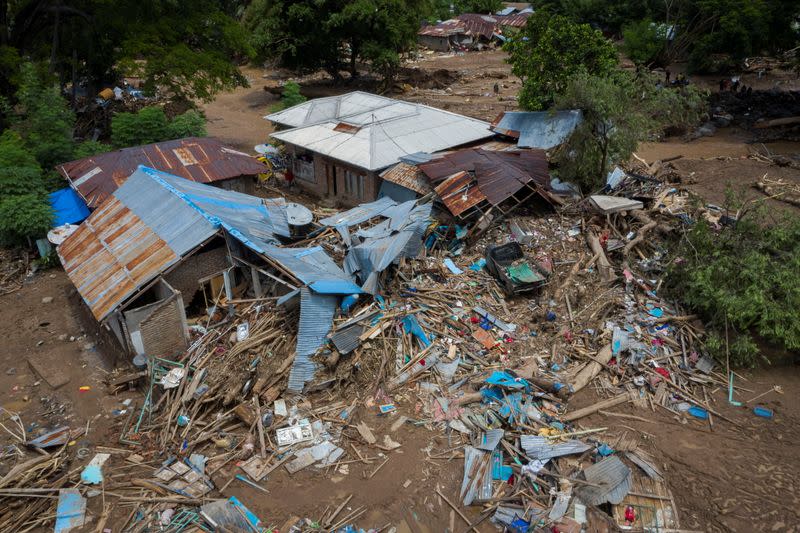
Tropical cyclone Seroja, one of the most powerful cyclones ever to hit Indonesia, struck on Sunday killing 163 people, mostly on the islands of Lembata, Alor, and Adonara, among the poorest and least developed parts of Indonesia, Reuters reports. The sprawling archipelago, which is made up of more than 17,000 islands, is used to dealing with disasters ranging from earthquakes to volcanic eruptions. But cyclones of this power have been rare, leaving many areas poorly prepared.
“There were no government warnings in the village,” said Gregorius, recounting how he managed to flee with his family before returning to help treat injured neighbors and assist those who had lost everything.
Authorities will need to learn fast from the disaster since Indonesia’s weather agency (BMKG) has warned once-rare tropical cyclones are happening more often, with another potentially damaging cyclone due to hit this week. Activists and researchers point to a slow response to Seroja, with little early warning infrastructure in place.
“We should’ve evacuated faster, like predicting when it would happen, who to evacuate,” said Dominikus Karangora of the Indonesian Forum for the Environment (WALHI), a non-governmental group, in East Nusa Tenggara.
Some residents used traditional means to warn people, with reports of mosques using loudspeakers and church bells to warn of imminent danger. Indonesia’s weather agency feeds warnings to local disaster mitigation agencies and also provides warnings on its website. Isyak Nuka, head of the disaster mitigation agency in East Nusa Tenggara, said such measures were usually effective, but the scale of flash floods and landslides was “unprecedented”. Isyak pledged to use this disaster as a lesson to strengthen the system.
Erma Yulihastin, a climatologist at the Indonesian National Institute of Aeronautics and Space, said Seroja was an anomaly in its destructive force since such cyclones do not usually gain traction in a country straddling the equator.
“Tropical cyclones don’t happen that much, but when they happen the damage is extraordinary,” she said.
Agie Wandala Putra, a researcher at BMKG, said Indonesia’s preparedness was currently skewed towards guarding against disasters such as earthquakes and tsunamis and needed to put more attention on events like flooding, cyclones, and droughts.
“What needs to be emphasized is not just an early warning, but also our response capacity,” he said.